
Solutions / Control-system support

Maintain control reliability. Improve what limits operation.

Maintenance, fault diagnosis, optimization and retrofit engineering for gas turbine control systems and critical instruments.

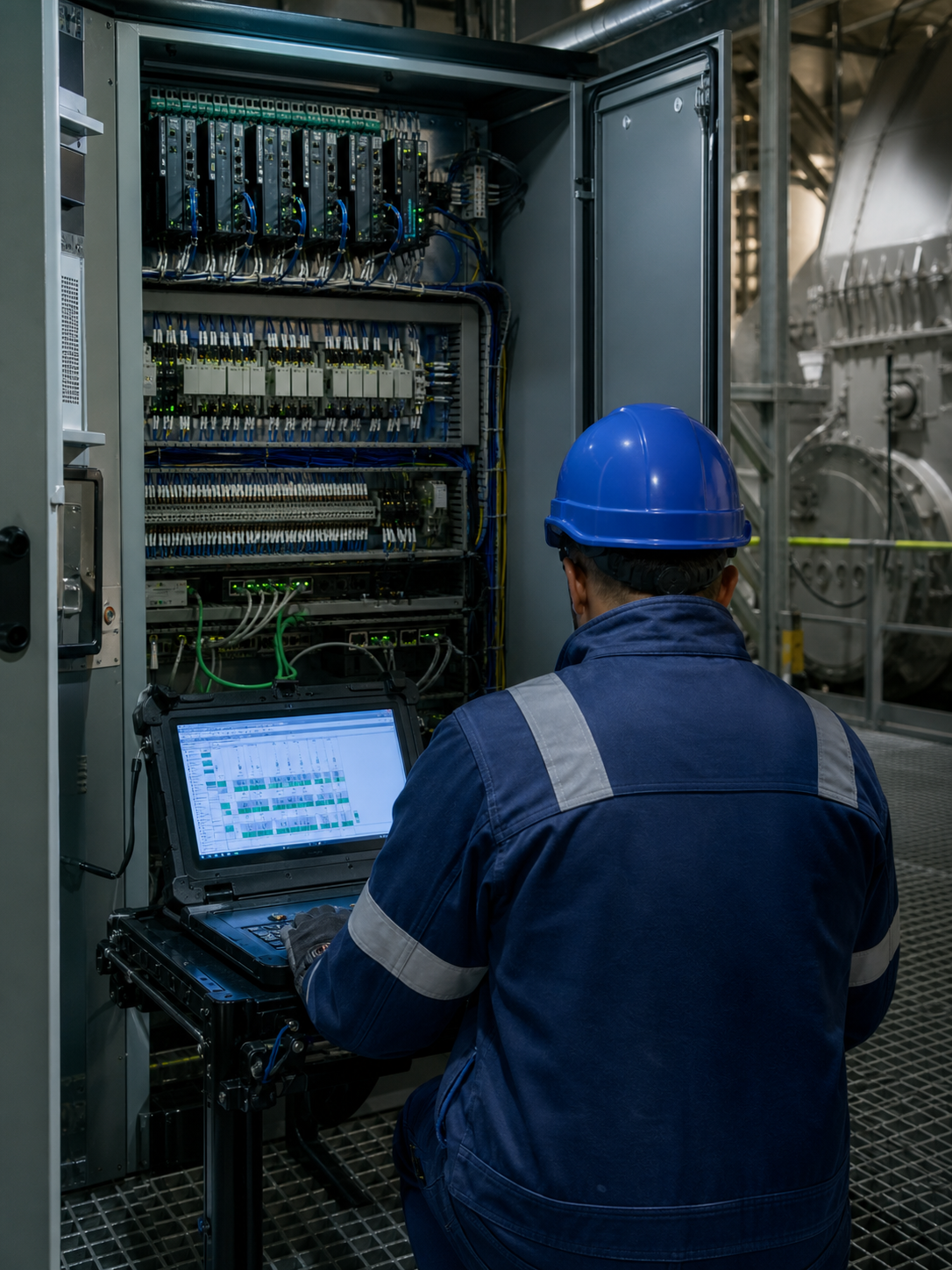
Technician performing gas turbine control system maintenance and troubleshooting
01 / MAINTENANCE

Control system maintenance & troubleshooting

We support gas turbine units through evidence-based diagnosis, configuration recovery and focused corrective work. The review follows the complete signal path—from field instrument and terminal board to I/O pack, controller logic, network and HMI.

Mark V / Mark VI / Mark VIe / Mark VIeS controller health assessment

Review diagnostics, controller state, configuration, redundancy status and time-correlated alarms before disturbing the installed system.

I/O pack and terminal-board fault diagnosis

Trace the affected signal from field termination through the terminal board and I/O pack, separating wiring, power, channel and controller causes.

IONet, UDH and PDH communication recovery

Check topology, link state, error evidence, network boundaries and correlated events for each communication layer independently.

Configuration backup, restoration and version control

Preserve a verified known-good baseline, record software and firmware dependencies, and keep an executable recovery path during the work.

HMI maintenance, alarm review and performance tuning

Validate display data, alarms, events, trends, accounts, time synchronization and workstation health as one operator-layer system.

Gas turbine control optimization and retrofit engineering work
02 / OPTIMIZATION

Control optimization & retrofit

Each modification begins with the system architecture and the technical problem. GGP develops the technical scope, verifies compatibility, prepares logic and I/O changes, and supports controlled implementation through final commissioning.

Grounding and communication-path improvement

Locate field-circuit, grounding and network fault boundaries from measured evidence before defining corrective work and return-to-service checks.

Legacy hardware and HMI modernization

Match hardware and software revisions, preserve licenses and project files, and retain a tested fallback until site acceptance.

Site-specific control and instrumentation modification

Develop wiring, I/O, logic, mounting and interface changes from the actual cabinet, field device and operating requirement.

Compatibility analysis and implementation planning

Confirm electrical, mechanical, software, network and protection dependencies before materials are released or outage work begins.

Loop checks, functional tests and commissioned handover

Verify the modification from input through logic, indication and final output, then issue test evidence and as-built records.

Selected project scopes

What the engineering work includes.

Each scope is organized around the initiating condition, engineering actions, verification and required deliverables.

PROJECT TYPE / 01Controls

Mark VIe grounding & communication improvement

For intermittent I/O faults, communication errors, ground leakage or unexplained control-system disturbances.

Capture the exact operating evidence

Record alarm tag, channel, timestamp, unit state and recent maintenance before the intermittent symptom disappears.

Correlate trends and environment

Compare recurrence with humidity, temperature, vibration, outage work and other events that can narrow the likely fault boundary.

Inspect only under approved isolation

Check cabinet and field terminations for moisture, corrosion, insulation damage, shielding and grounding after the required controls are in place.

Segment before replacing hardware

Divide the field circuit into controlled sections and use approved test methods to locate the affected branch before changing I/O hardware.

Verify alarm, channel and network health

Monitor the repaired circuit and separately confirm IONet, UDH and PDH status during the return to service.

PROJECT TYPE / 02Operator layer

HMI, workstation & historian modernization

For aging workstations, version mismatch, limited event history or insufficient data-storage resilience.

Verified project and software baseline

Freeze the running project and record workstation hardware, operating system, software, patches, licenses and backups.

Network, EGD, account and time dependencies

Capture addressing, exchange definitions, user access, name resolution and time sources before rebuilding the workstation.

Controlled installation and project restore

Restore only the approved project and verify integrity before connecting the replacement workstation to the live control network.

Complete operator-layer SAT

Test displays, commands, alarms, events, trends, historian collection, permissions and time synchronization with recorded results.

Executable rollback retained

Keep the previous image, configuration and recovery steps available until the replacement is accepted under operating conditions.

Project execution

A controlled path from evidence to operation.

Scope, backups, test criteria and handover requirements are established before changes are applied to the unit.

01

Diagnose

Review architecture, configuration, alarms, events, trends, drawings and operating symptoms.

02

Define

Confirm compatibility, technical scope, logic and I/O changes, materials, backups and test plan.

03

Implement

Prepare remotely, execute controlled site changes, complete wiring, configuration and loop checks.

04

Verify

Perform functional and protection tests, monitor trends, record results and hand over as-built information.

Typical project outputsAssessment notesCompatibility & modification scopeTest recordsAs-built handover
Discuss a project

Share the unit, system and operating objective.

Contact engineering ↗